 Obesity and overweight are increasing in the US and the world. About 68.8% of US adults are overweight or obese; about 1/3 men and women. Worldwide obesity has doubled since 1980; 1.9 billion adults over the age of 18 are overweight or obese.
Health effects of overweight and obesity
Raised BMI is a major risk factor for non-communicable diseases such as:
- Cardiovascular diseases (mainly heart disease and stroke), which were the leading cause of death in 2012.
- Diabetes.
- Musculoskeletal disorders (especially osteoarthritis – a highly disabling degenerative disease of the joints).
- Some cancers (including endometrial, breast, ovarian, prostate, liver, gallbladder, kidney and colon).
The overfat study changes the emphasis from amount of weight to amount of fat
“Many normal-weight and non-obese individuals exhibit excess levels of body fat that can adversely affect their health.” The use of usual measures like body mass index (BMI) “may misclassify up to 50% or more of patients with excess body fat who may have increased health risks.
To help correct those analyses, this study introduces terms that focus on the health effect of weight
- Overfat is “excess fat that can impair health” regardless of weight
- Normal weight obesity (NWO) association between normal weight and high body fat percentage with health effects
- Metabolically obese — body fat impacts health
What you should know
- You can be normal weight and have too much fat!!
- In spite of what you see on various health websites, a guide for how much body fat you should have (healthy body fat percentage) is still in process.
- It is the fat inside your body (that you can’t see) not the fat under your skin (which we obsess over in our culture) that is important.
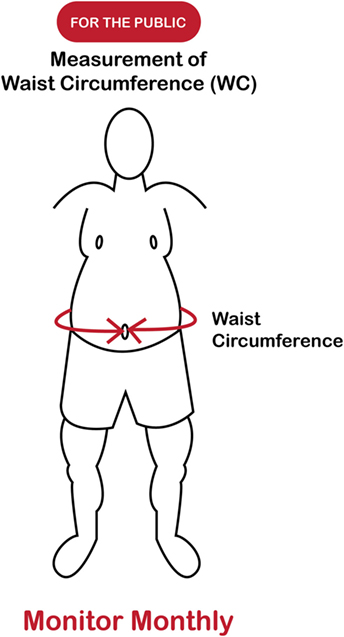
- Use waist circumference as a marker
- Measure your middle at the level of your bellybutton (waist circumference).
- Waist circumference (WC) provides an independent prediction of risk over and above that of BMI.
- At BMIs 35, waist circumference has little added predictive power of disease risk beyond that of BM.
- WC > 102cm (40 in) in men and >88cm (35 in) in women are associated with an increased risk of type 2 diabetes, high cholesterol, high blood pressure and cardiovascular disease.
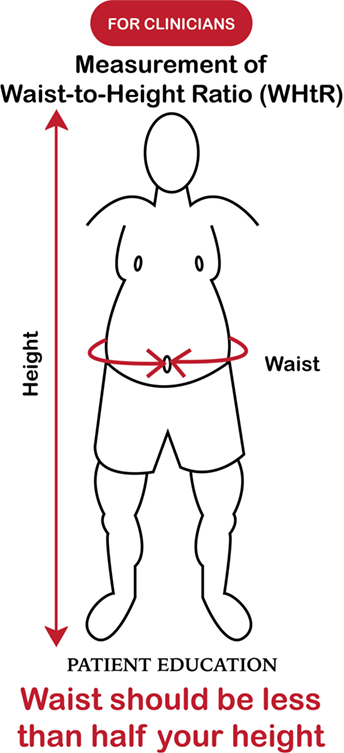
- Waist to height ratio—waist should be less than half your height.
Tips for getting there
- Eat more vegetables
- Eat fewer carbohydrates
- Add healthy fats (avocado, olive, fish oils)
- Move more (30 minutes moderate exercise most days)
Links
http://www.frontiersin.org/files/Articles/282777/fpubh-05-00190-HTML/image_m/fpubh-05-00190-g003.jpg
http://www.frontiersin.org/files/Articles/282777/fpubh-05-00190-HTML/image_m/fpubh-05-00190-g004.jpg
https://www.nhlbi.nih.gov/health-pro/guidelines/current/obesity-guidelines/e_textbook/txgd/4142.htm (Table IV-2)